
Credit cards are bad. That was the lesson I grew up with. My parents had said it enough times that it just stuck — debt is dangerous, and credit cards are the worst kind of debt. I never questioned it. Somewhere along the way, the lesson became a rule: never apply for one, never carry one, just stay away.
Looking back, the advice itself isn't wrong. Credit card debt is genuinely harmful if you're not careful. But I had taken a reasonable warning and turned it into a blanket policy — one I followed without ever thinking about why.
I came to the US in 2019 for my master's in Florida. By early 2020, I had my SSN, which made it much easier to apply for a credit card and start building credit here. It came through as part of my internship process. The door was right there.
I didn't even try to open it.
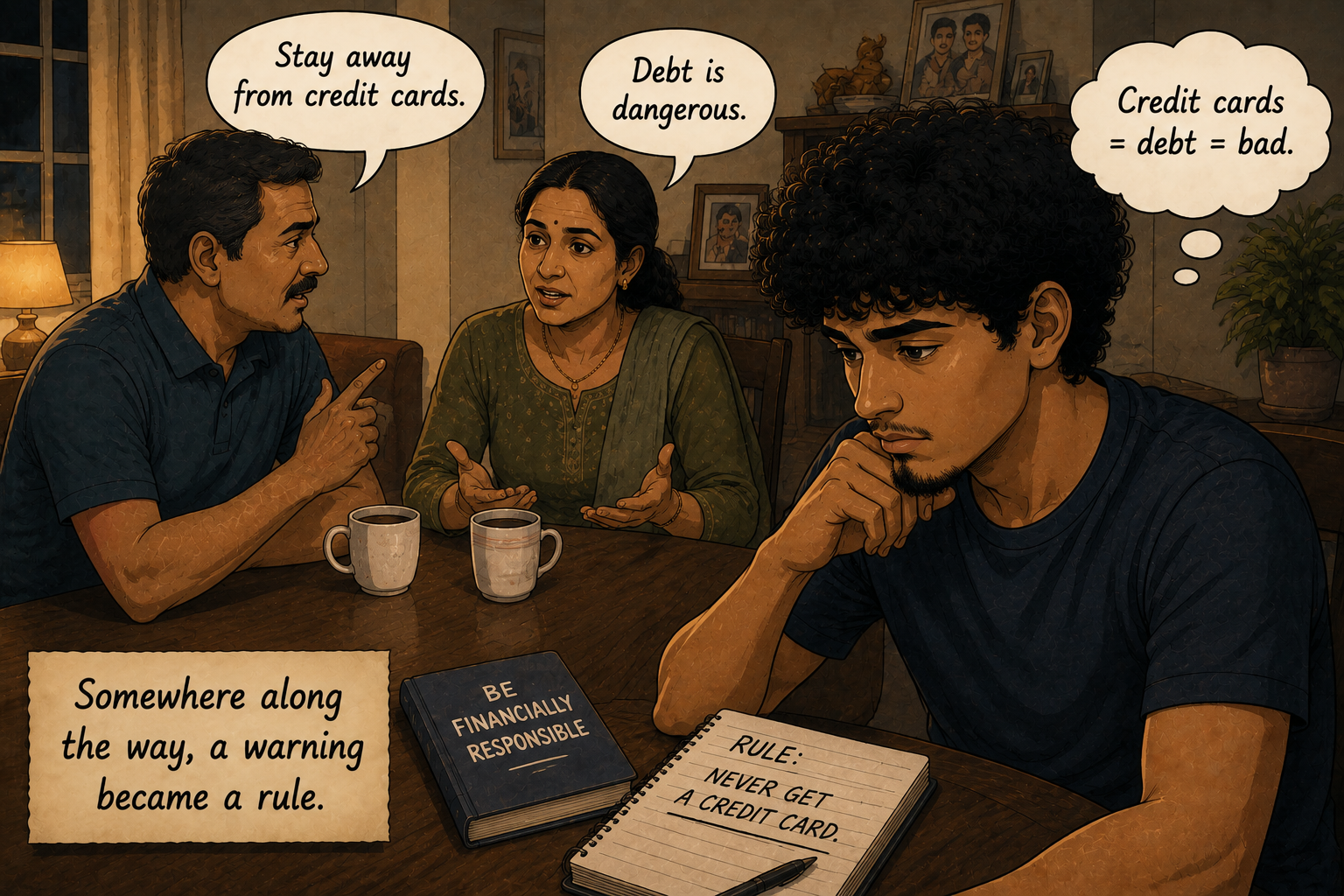
I was completely focused on my career at the time. Learning as fast as possible, getting better at my job, building skills. Financial stuff felt like noise. I used my debit card for everything and never thought twice about it. Honestly, I didn't even know what a credit score was or why any of it mattered. I just knew credit cards were bad — and since I didn't have one, I thought I was doing the right thing. I was almost proud of it. It never occurred to me that I might be missing something.
Fast forward to 2021. I was about to finish my master's in Florida, with a job offer waiting in California. Coast to coast — a new city, a new life, completely on my own.
I had no credit card. No credit history. Nothing.
The Discover Student card — the one practically every international student applies for during their studies — wasn't an option anymore. I had already graduated. Most of the mainstream cards I looked at expected an established credit history, which I didn't have.
When I started looking for apartments in California, I found a place I loved — good location, great deal. I submitted the application. They asked for a credit score.
That was the first real slap.
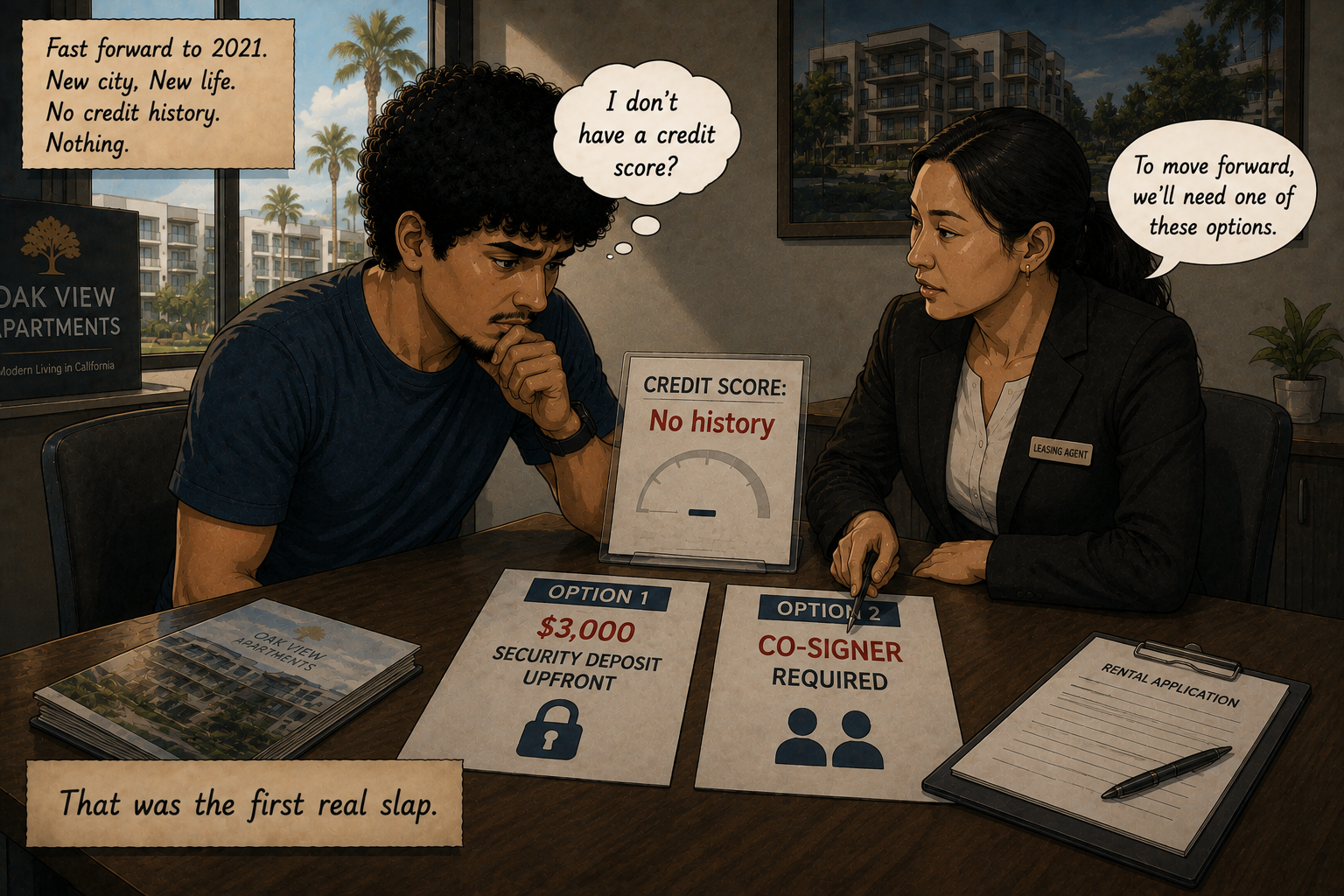
They gave me a 24-hour deadline and two options. First: pay a $3,000 security deposit upfront. That was technically possible, but the landlord had bad reviews about returning deposits at move-out, and I wasn't comfortable locking that much cash away before I had even started my job. Second: find a co-signer. A close friend of mine — someone who had come to the US a year before me — had already built up his credit by then. He agreed to co-sign my lease. Without him, I genuinely don't know if I would have gotten that apartment. The idea of starting a new job in a new city without somewhere to live, all because I had never applied for a credit card — that hit differently.
Right after that, I opened a Discover Secured Credit Card. The deposit became my credit limit. I used it for everyday purchases and paid the full balance every month. After about six months, Discover upgraded my account and refunded the deposit. I finally started building a credit score.
A few months later, I needed a car. Where I was living in California, managing without one wasn't realistic — even something as basic as buying groceries became difficult.
I went for a few test drives, found a car I liked, and applied for financing. They pulled my credit. I barely had any credit history at that point. The result was a 6.3% APR on the loan.
And this was late 2021 — the worst possible time to be buying a car. The supply chain crisis had flipped the entire market upside down. New cars were scarce. Used cars were somehow selling for more than new ones. I was already in a tough spot, and a weak credit profile made it worse.
So I delayed the purchase by two months to build my score up enough to get a better rate.
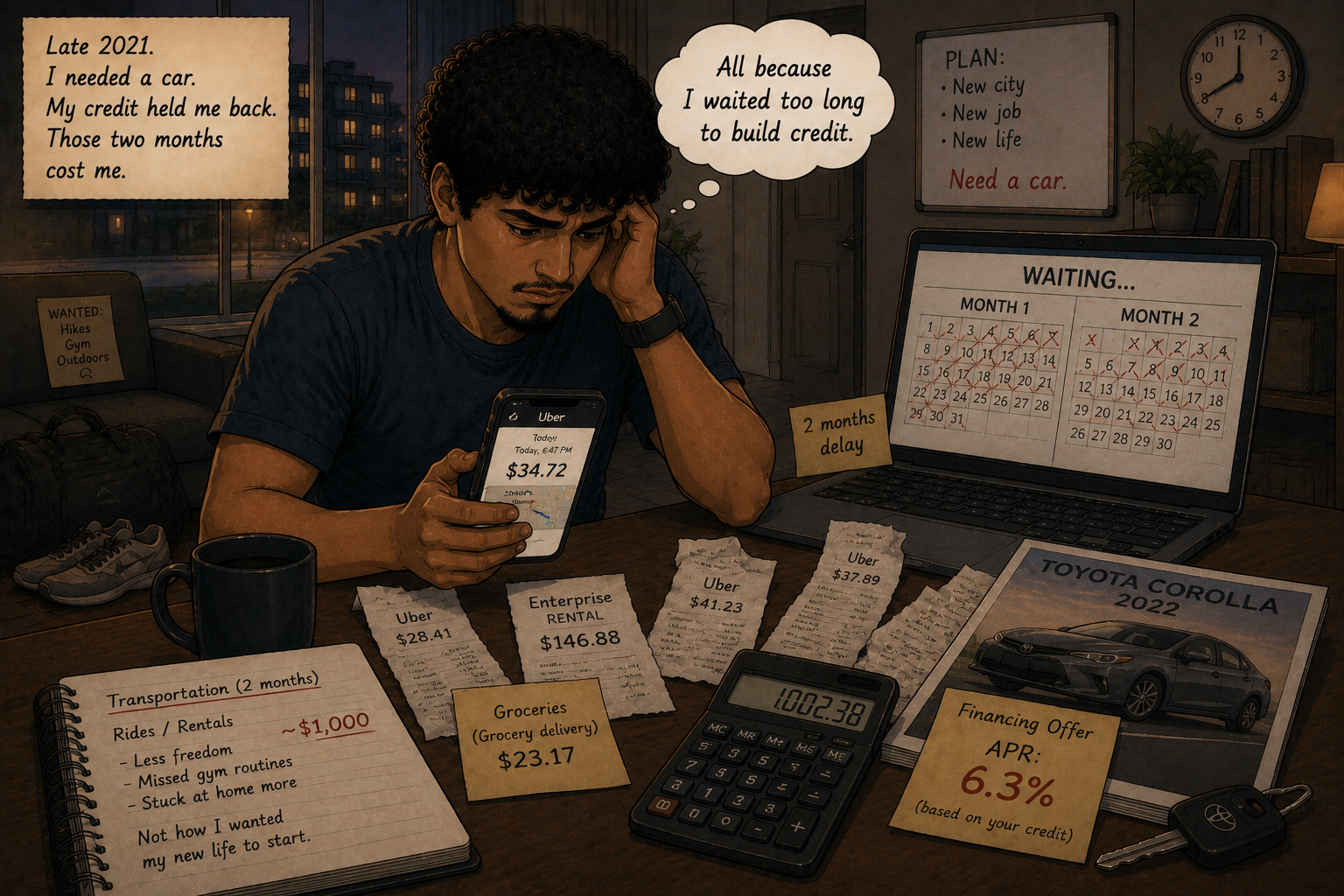
Those two months cost me. I was spending money on cabs and rental cars just to get around — close to $1,000 over those two months, which was a lot at that point in my life. I was stuck at home more than I wanted to be. The gym routines I had built, the outdoor things I loved doing — all of it took a hit because getting anywhere required planning and paying for it. Every ride I booked was a small reminder of the same mistake I had made years earlier and was still paying for.
Two months later, I finally bought the car.
That was the moment I decided to stop treating personal finance as something I'd get around to eventually.
Whenever I talk to students who've just moved to the US, or anyone planning to come here, this is always the first thing I bring up. Apply for a credit card the moment you're legally eligible. Use it for things you'd already be buying. Pay the balance in full every month. That's it.
The cost of not doing this isn't abstract. It shows up when you're trying to rent your first apartment, when you're financing your first car, and in every interest rate you get offered for years after that.
I think the mental conditioning is genuinely hard to shake. When something has been repeated to you your whole life as a warning, it quietly becomes a rule. And rules don't get questioned — they just get followed. I never stopped to separate the actual lesson from what I had made it mean.
I learned it the hard way. You don't have to.