
One night, it was almost 11 PM. I'd had a solid day — meals tracked, workout done, everything logged. But my step count was sitting at around 7,000 and I had a goal of hitting 10,000. So I started walking back and forth through the stretch of hallway between my living room and kitchen, until the watch finally ticked over. Then I went to sleep.
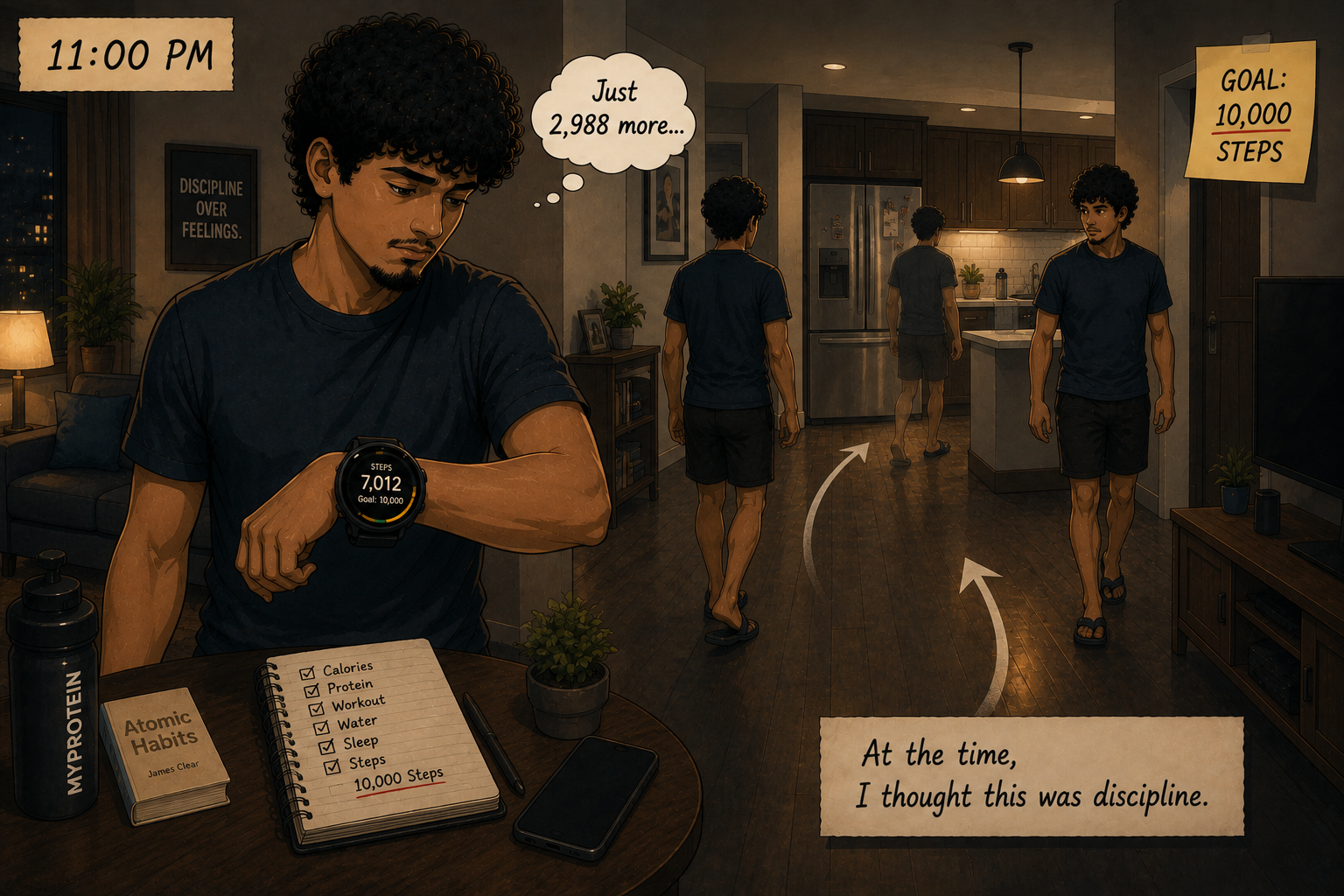
At the time, I was proud of that. I thought it was discipline.
This was late 2025. I was already doing three strength sessions a week, eating well through most of the week — weekends going to biryani and ice cream, as they should — and I'd been experimenting with different training programs for a couple of years.
Around that same time, I started going deeper into the science of body composition. I'd spent years chasing a lower number on the scale, but I was starting to question whether that was even the right thing to chase. I read about body fat percentage, the limitations of BMI, and why scale weight alone couldn't tell me whether changes were coming from fat, muscle, water, or something else. Eventually I went and got a DEXA scan — the first time I'd ever done one. It came back at around 30% body fat. I wanted to get to 20%.
AI was everywhere by then, and I decided to use it as my coach to get there. The rules were simple — photograph every meal, let the AI estimate the macros and calories, log my watch data (sleep score, steps, recovery metrics), and weigh in daily so it could adjust things based on actual progress. The advantages were real: real-time calorie adjustments, suggestions on what to order at restaurants, and a better understanding of how sleep was affecting my recovery. It genuinely felt like carrying a knowledgeable coach everywhere I went.
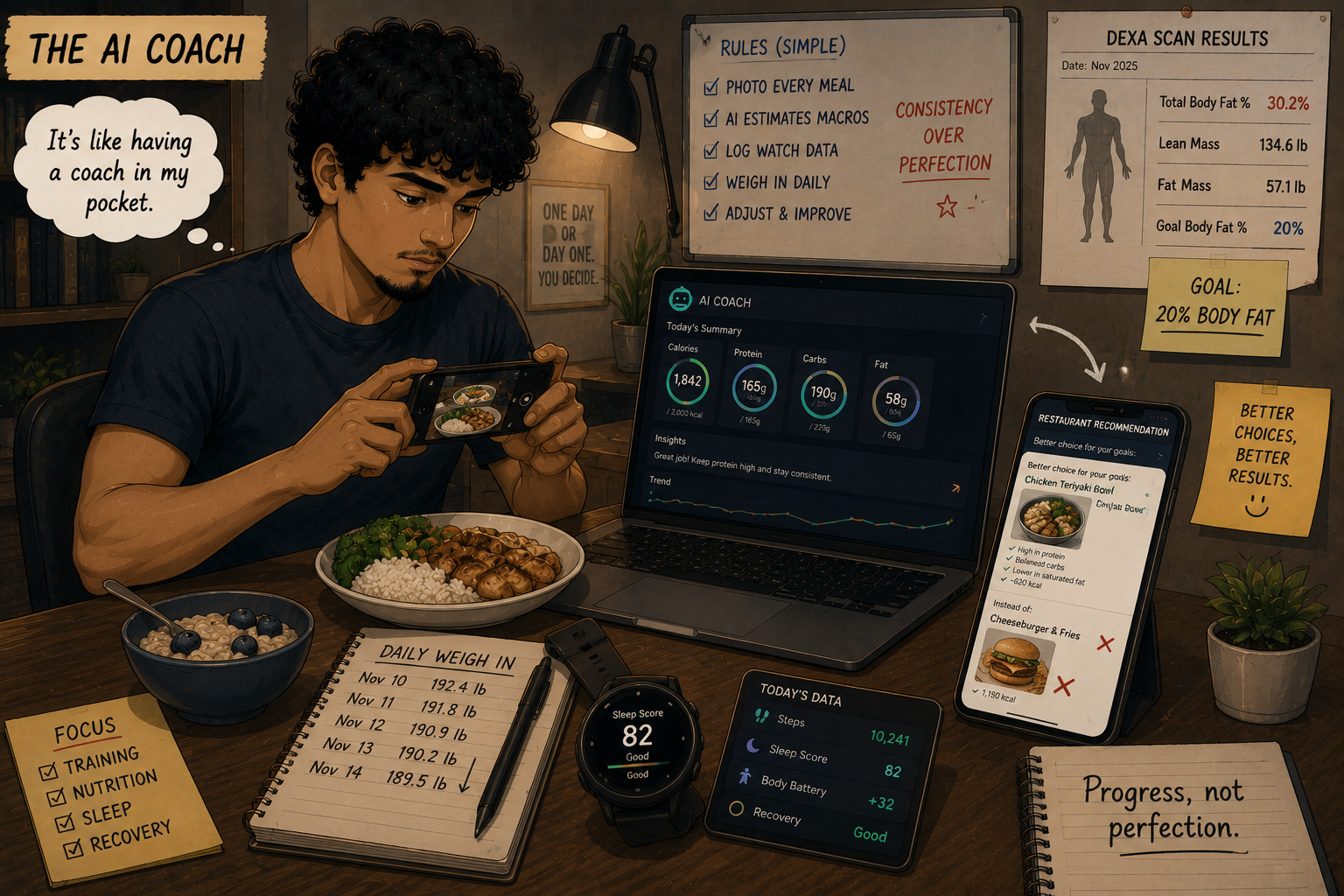
I documented all thirty-five days as a daily series on my Instagram. I'll write a whole article on the AI approach at some point because there's a lot to cover. But this article is about what happened after.
And it worked. I lost weight. My strength improved. I felt more in control of my body than I had during either of my previous two transformations.
But something was quietly changing. AI had made individual decisions easier, but I'd ended up creating even more decisions that needed to be tracked, analyzed, and reported every single day. I was hitting every target — meals logged, workouts done, steps hit, sleep tracked. And I started needing to hit all of them. Not most. All of them.
That's how you end up pacing your hallway at 11 PM just to finish your step count.
Over time, tracking wasn't a tool I was using anymore. It had become something I was serving.
I also had back-to-back travel during this period. By the time the trips arrived, thirty-five straight days of logging everything had worn me down. For Japan, I gave myself full permission to stop tracking. For India, I told myself I'd try to be about 80% disciplined. I couldn't manage it. So I relaxed the rule again and told myself I'd just resume properly once I was back in the US with my regular routine.
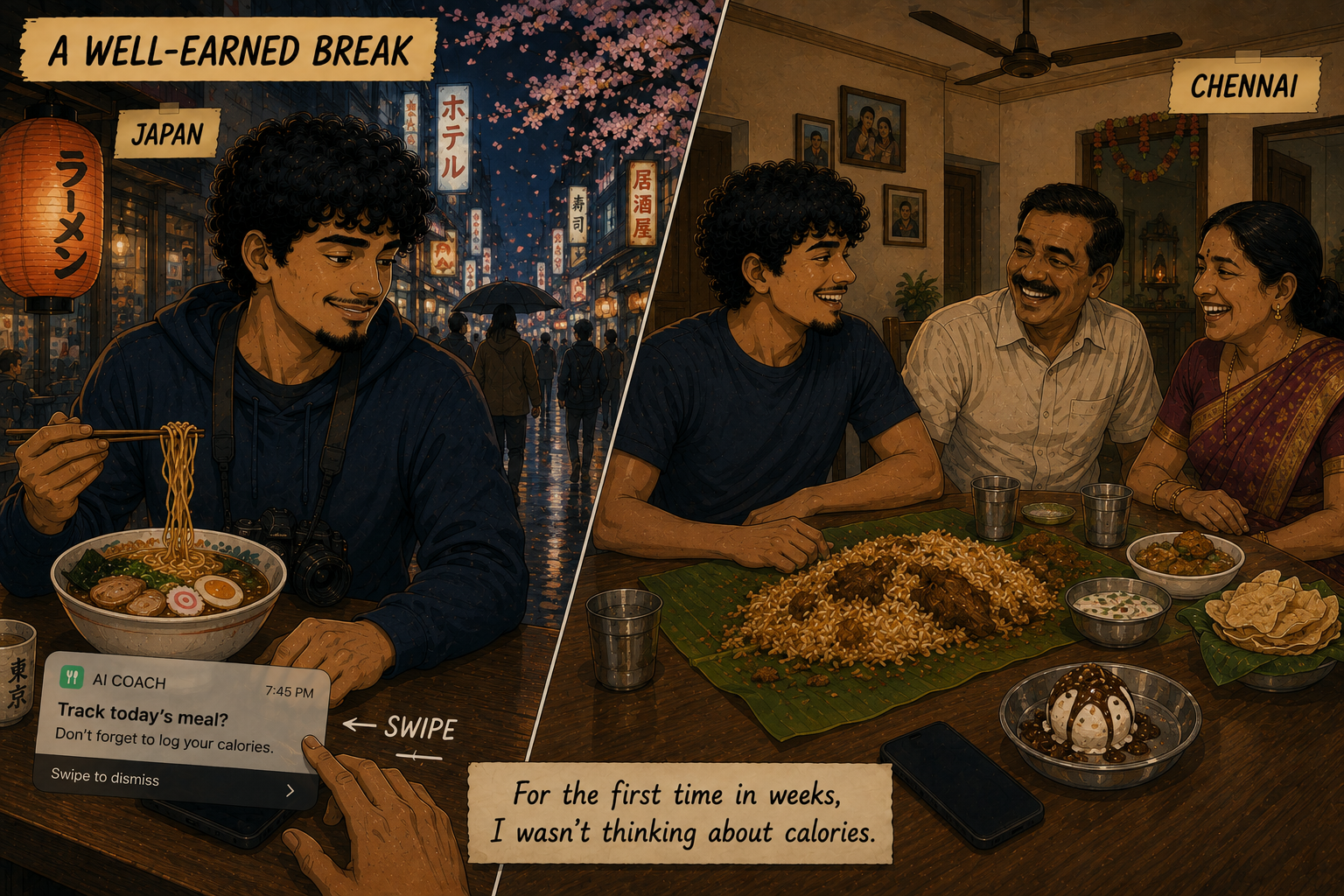
By the time both trips were over, the scale had climbed sharply and much of the visible progress felt gone. And honestly, I think I could have made better choices during those trips. But I'd arrived at them mentally drained from constantly trying to optimize everything. My mind just wanted to stop calculating for a while. That part is hard to put into words unless you've felt it yourself.
But the travel wasn't really the problem. Travel ended. The problem was that I couldn't figure out how to start again.
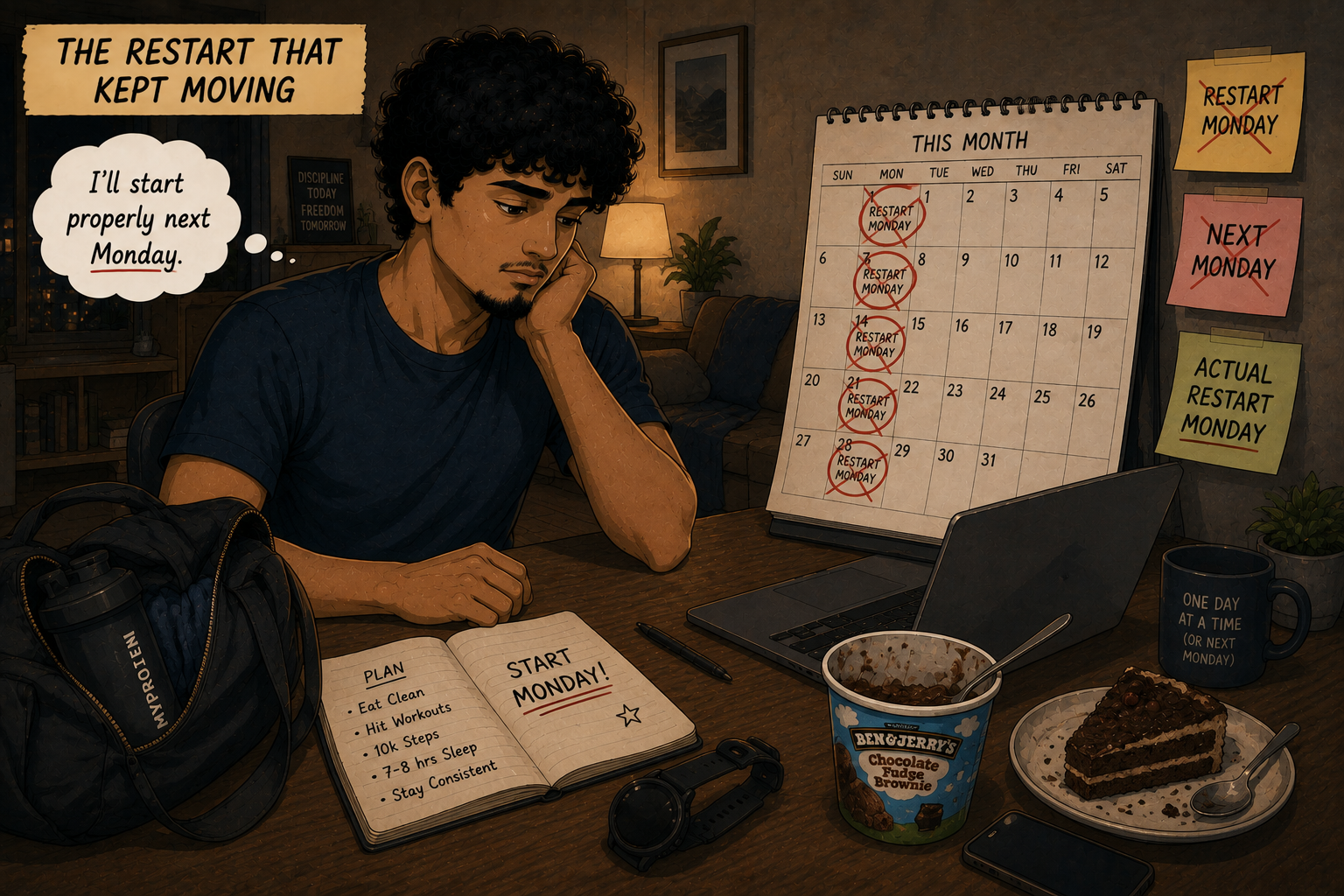
I'd built a system where every day was either fully on or it wasn't. And that thinking followed me home. If I had ice cream on a Tuesday, I'd tell myself the week was already off. Might as well enjoy the rest of it and restart properly on Monday. If I missed a workout, the week became a "warm-up week" in my head — still not quite there yet, allowed to be a bit loose, the real thing starting very soon. And if I had a day where I exercised, ate well, and slept fine but only hit 6,000 steps instead of 10,000, that still counted as a failed day. Not doing it right. Push the restart further.
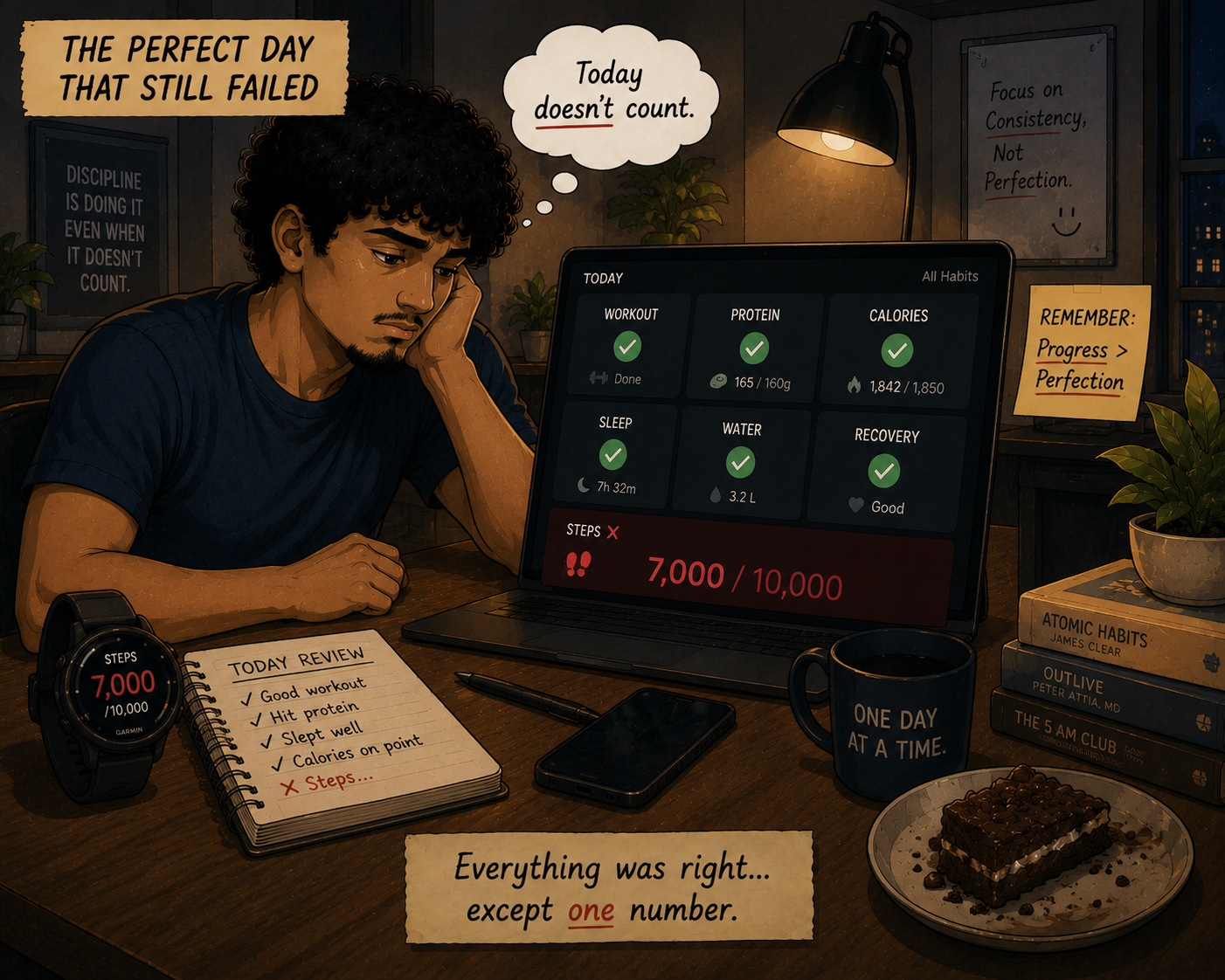
This feels so dumb to write. But that is genuinely what was happening.
When I started looking into the psychology of it, I realized I'd built an all-or-nothing relationship with fitness. Things that were actually good — eating well, exercising, sleeping properly — had somehow turned into stressors. My mental recovery was poor not because the habits were wrong, but because I'd wired them to need perfect execution every single day to count for anything.
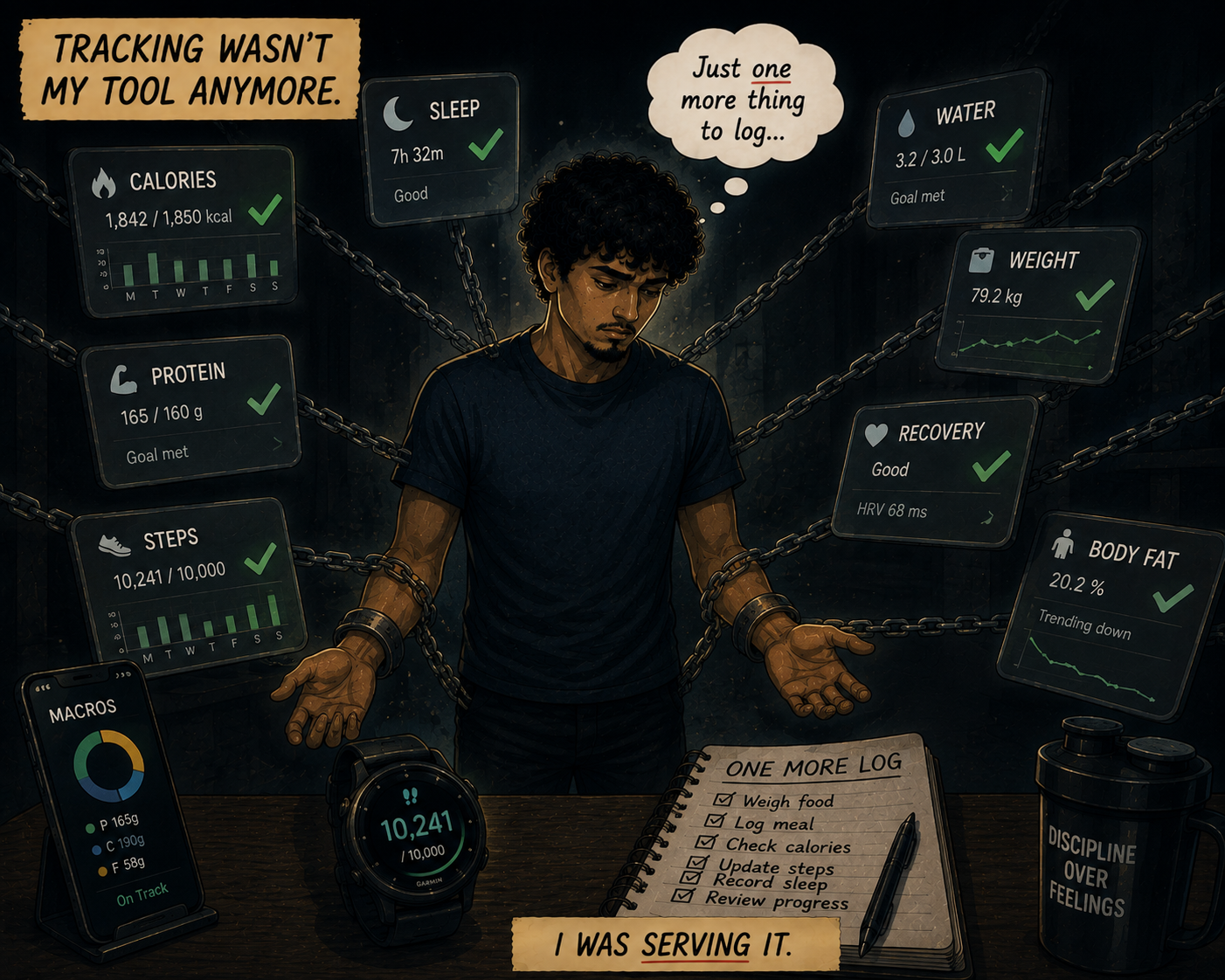
The gap in my system wasn't the calories or the steps or the workouts. It was that I'd never figured out how to continue imperfectly. I had a protocol for a good day. I had nothing for a missed workout, a tough week, or a day that just ended at 6,000 steps.
I'm still figuring out what the better version looks like. But it starts with fewer absolutes. A missed workout is just a missed workout. A low-step day doesn't cancel out a good meal. Travel doesn't have to mean either perfect discipline or complete abandonment. And getting back on track doesn't need a Monday or a clean slate. It just needs the next meal.
My first transformation failed because I thought cardio was enough.
My second failed because I was training for a wedding, not a life.
My third failed because I mistook obsession for discipline.
The tracking wasn't the mistake. The AI actually helped. The mistake was building a relationship with fitness where anything less than perfect felt like failure — and then being completely lost when imperfection inevitably showed up.
The best routine isn't the most precise one. It's the one that still works on an imperfect day.